Perfectly groomed brows don’t happen by accident — they happen with the right tool. If you’ve ever struggled with a blunt tweezer that snaps hairs instead of pulling them, you already know why professionals reach for a slant-tip tweezer. In this guide we cover what makes the slant tip the gold standard for eyebrow shaping, how to use it without the pain and pinching, and why the Professional Stainless Steel Slant-Tip Tweezer (Silver) is the one we recommend to every customer at Export Shelf.
Why Slant-Tip Tweezers Are the Pro Standard
Among all tweezer tip styles — pointed, flat, rounded and slanted — the slant tip wins for everyday brow work for a simple reason: it combines a wide gripping edge with a defined point. The angled edge lets you grab several hairs along the brow line in one motion, while the tip is precise enough to isolate a single stubborn strand. Pointed tweezers are better for ingrown hairs and splinters; flat tweezers cover area but lack precision. The slant does both jobs well, which is why it’s the shape stocked in virtually every professional kit.
What to Look for in a Good Tweezer
- Aligned tips: the two jaws should meet flush along the entire edge. Even a hair’s-width gap means slipping and breakage.
- Stainless steel: rust-resistant, easy to sanitize, and holds its alignment. Cheap plated tweezers lose their edge alignment fast.
- Balanced tension: it should close with light finger pressure — too stiff and your hand tires, too loose and hairs slip.
- Filing, not coating: the grip edge should be filed metal, not painted, so it bites the hair cleanly.
How to Shape Your Brows with a Slant-Tip Tweezer — Step by Step
- Prep the skin. Tweeze after a warm shower or hold a warm compress on the brow for a minute — open pores release hair with far less discomfort.
- Map your shape. Hold the tweezer vertically at the side of your nose — that’s where the brow should start. Angle it through the pupil for the arch, and to the outer corner of the eye for the tail.
- Work under the brow, not above it. Removing hair along the bottom edge lifts the eye; over-tweezing the top flattens your natural arch.
- Pull in the direction of growth. Grip the hair close to the root and pull smoothly — never yank upwards, that’s how you get broken hairs and ingrowns.
- Step back every few pulls. Check both brows at arm’s length — symmetry matters more than removing every stray.
Care Tips — Make It Last
- Wipe the tips with rubbing alcohol after each use to keep them sanitary.
- Store with the protective cap on — a dropped tweezer lands tip-first and knocks the jaws out of alignment.
- If hairs start slipping, the tips have likely dulled or misaligned — that’s the signal to replace, not to squeeze harder.
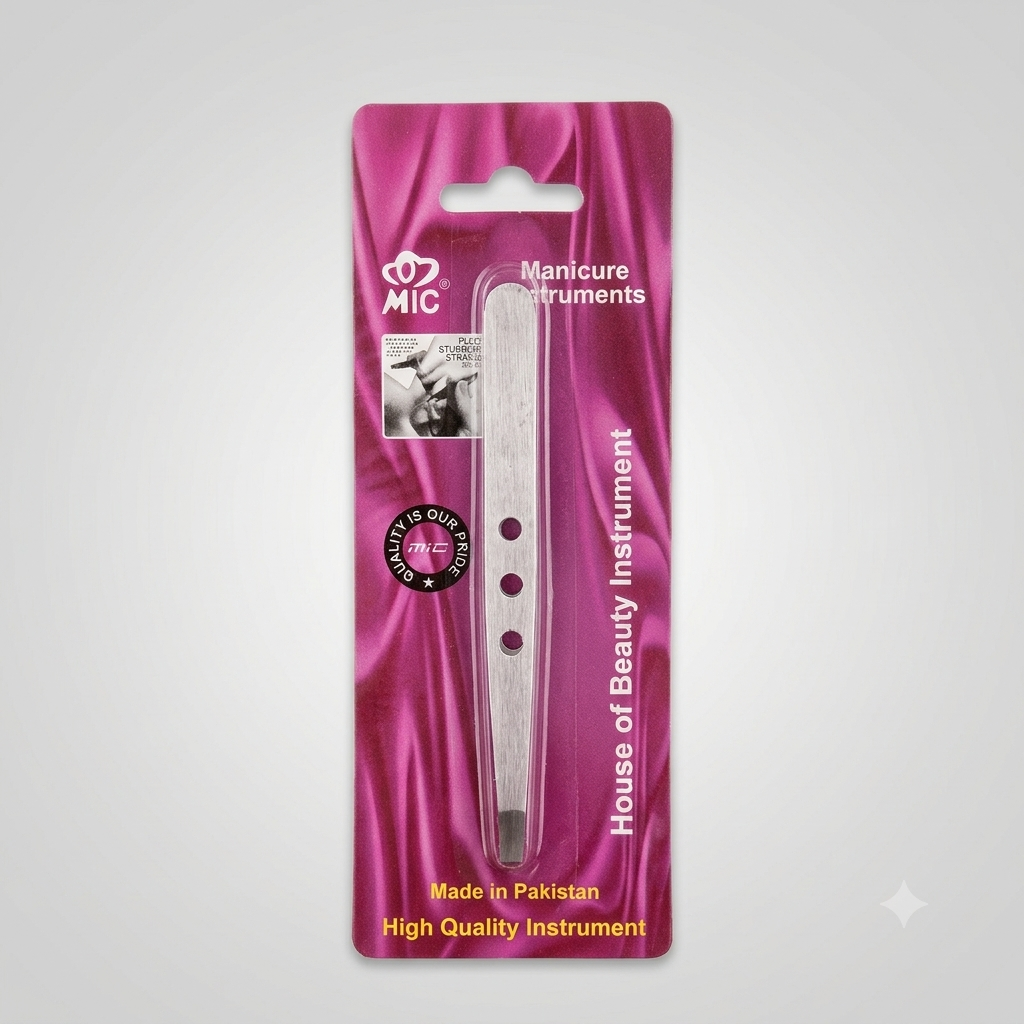
Our Pick: Professional Stainless Steel Slant-Tip Tweezer (Silver)
The Professional Stainless Steel Slant-Tip Tweezer checks every box above: full stainless-steel body in a clean silver finish, precision-aligned slant tips that grip fine hairs first try, and balanced spring tension that won’t fatigue your grip. At Rs.202 it’s an easy upgrade over the blunt tweezers hiding in most makeup bags — and it’s eligible for cash on delivery, free shipping over Rs.499 and our 7-day easy returns.
Frequently Asked Questions
Are slant-tip tweezers better than pointed ones?
For everyday brow shaping, yes — slant tips grip both single hairs and small sections precisely. Pointed tweezers are more specialized: they excel at ingrown hairs and splinters but are easier to pinch skin with.
How often should I replace my tweezers?
A good stainless-steel tweezer lasts years with proper care. Replace it when the tips stop gripping fine hairs cleanly or the jaws visibly misalign after a drop.
Does plucking with a slant tweezer hurt less?
A sharp, well-aligned tip grips the hair firmly so it releases in one pull — that means fewer repeat tugs on the same spot, which is what actually causes the pain.
Can I use it for facial hair besides brows?
Yes — the slant edge works well for upper-lip strays and chin hairs. For very fine fuzz, work in bright light and pull in the growth direction.