Disclosure: This article contains referral links. If you buy through them, we may earn a small commission at no extra cost to you.
Every sunscreen on a Pakistani shelf falls into one of two camps — and the difference between them changes how the product feels, how it protects, and whether it suits your skin at all. If you are weighing mineral vs chemical sunscreen, here is what the distinction actually means, why the white-cast complaint exists, and which type fits your skin in Pakistan’s climate.
How each type works
Mineral (physical) sunscreen uses zinc oxide and/or titanium dioxide — it sits on the skin and reflects UV rays away, like a shield. It protects immediately on application, is gentle on sensitive skin, non-comedogenic, and less irritating around the eyes. The famous downside: the white cast — because the minerals are literally a physical layer, they can leave a visible film on deeper skin tones.
Chemical sunscreen uses organic filters (avobenzone, oxybenzone, and similar) that absorb UV rays and convert them to heat. It is lighter, invisible on all skin tones, and layers easily under makeup. The trade-offs: it needs 15–20 minutes to become effective, can irritate sensitive skin or sting around the eyes, and some filters are comedogenic — a real concern for oily and acne-prone skin.
The white-cast question — is it a deal-breaker?
The white cast is mineral sunscreen’s main weakness — on deeper skin tones it can look ashy for the first few minutes. The honest answer: it usually settles. Modern mineral formulas are micronized so the cast is light and absorbs within minutes as the product settles into the skin. If you have a deep skin tone and it bothers you, chemical is the way; if you have sensitive, acne-prone, or post-treatment skin, the cast is worth the gentleness mineral gives.
Which is right for your skin — in Pakistan’s context
- Sensitive or reactive skin: mineral — it does not penetrate or irritate.
- Oily and acne-prone: mineral non-comedogenic formulas — chemical filters can trigger breakouts.
- Deep skin tones: either works, but if a cast bothers you, chemical is the invisible option.
- Post-procedure or active-based routines: mineral — it does not interact with acids, retinol, or vitamin C the way some chemical filters do.
- Everyday makeup wearers: chemical layers more invisibly under foundation.
The best mineral sunscreen in Pakistan
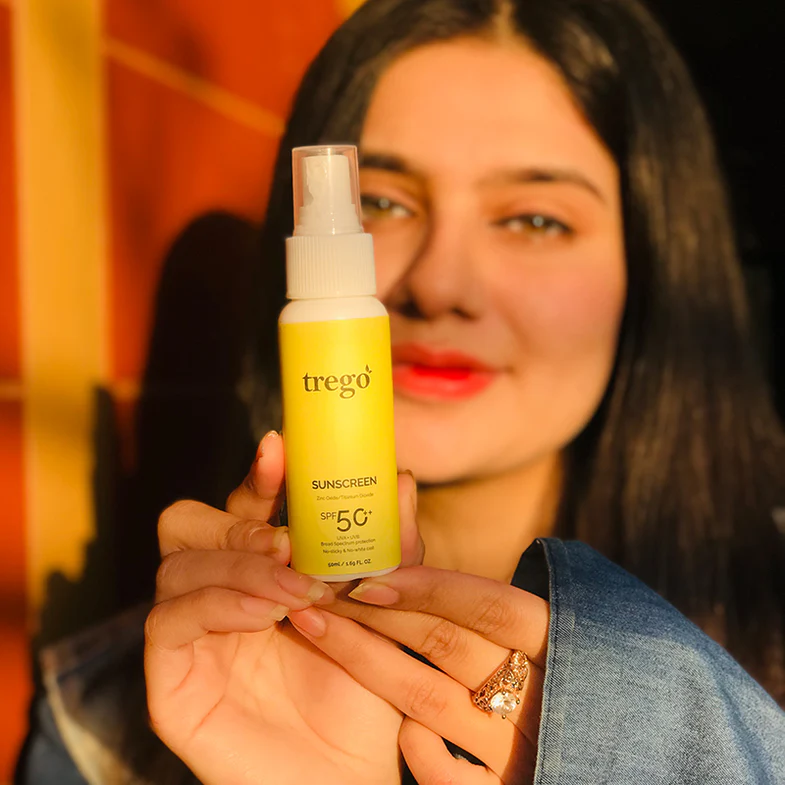
The Trego Sunscreen SPF 50++ is the strongest mineral option locally — broad-spectrum UVA/UVB at SPF 50++, non-comedogenic, non-greasy, and formulated for Pakistani humidity. It may show a light initial cast on deeper tones that absorbs within minutes — the honest trade-off for mineral gentleness. The tube costs around Rs.1,389 on Export Shelf (Rs.1,280 on trego.pk), has hundreds of verified reviews, and ships across Pakistan with cash on delivery.
Get 5% off with code Expo5
Order through Export Shelf — it sends you to the official Trego checkout — and enter Expo5 for 5% off your entire order. We have tested this code on our own orders and it worked every time, including on sale days. See our trego discount code guide for the walkthrough, or buy directly from the official Trego store where the code applies automatically.
How to wear mineral sunscreen properly
- Apply after moisturizer, as the last step before makeup.
- Use roughly a two-finger length for face and neck — underapplying is the most common reason sunscreen fails.
- Reapply every 2–3 hours outdoors — sweat and touching your face remove the physical barrier.
- Pair it with your morning actives — it protects vitamin C serum users and anyone on exfoliating routines.
Frequently asked questions
What is the difference between mineral and chemical sunscreen?
Mineral sunscreen (zinc oxide, titanium dioxide) sits on the skin and reflects UV; chemical sunscreen absorbs UV through organic filters and converts it to heat. Mineral protects instantly and is gentler; chemical is lighter and invisible on all skin tones.
Why does mineral sunscreen leave a white cast?
The minerals are a physical layer on the skin — that film can look ashy on deeper tones for a few minutes. Modern micronized formulas minimize it, and it typically settles as the product absorbs.
Is mineral or chemical better for acne-prone skin?
Mineral — it is non-comedogenic and gentler, while some chemical filters can irritate or trigger breakouts on reactive skin.
Which sunscreen type is better for Pakistani skin tones?
Both work — the choice depends more on whether a light initial cast bothers you. For sensitive or acne-prone skin, mineral is the safer pick regardless of tone.
Does mineral sunscreen need time to absorb?
Unlike chemical sunscreen (which needs 15–20 minutes to activate), mineral works immediately — the "cast" settles as it absorbs but protection is instant.
Referral note: we may earn a commission when you buy through the links in this guide. It does not change your price — and the Expo5 code takes a further 5% off.